Series · № 1 of 7 — Acreage Kitchens
Well In, Septic Out: What Private Water and On-Site Systems Do to a Viking Dishwasher in Cottage Lake and Hollywood Hill
On well-and-septic acreage around Cottage Lake and Hollywood Hill, both ends of a Viking dishwasher sit outside any municipal system. Untreated groundwater films glassware and exhausts filters early, and a cycling well pump swings the inlet pressure the fill valve sees.
Written by
Sofia Alarcon
- Role
- Service technician — refrigeration and defrost
- In the trade
- 15 years in the trade
What people here assume is wrong with it
That the dishwasher is failing. On acreage east and north of town the machine is usually fine and the water is doing the talking. The King County Assessor’s Area 36 report — which covers Woodinville, Cottage Lake and Hollywood Hill, most of it unincorporated with only the north-west portion inside the City of Woodinville — describes an area where many parcels have no municipal sewer and run on-site septic systems, and where supply comes from a public district, a shared system or a private well.
That is an unusual thing to say about an appliance article, but it is the entire diagnosis. On a well-and-septic property, both ends of the machine are outside anyone’s treatment plant. Nothing conditions the water going in and nothing but a tank and a drainfield receives what goes out. Parcels of one to ten acres and more are common out here, which is exactly the pattern that puts a house on its own systems.
What is actually happening
Three separate mechanisms, and they produce three different complaints that owners tend to blend into one.
Untreated groundwater around Puget Sound commonly carries iron and manganese, and hardness varies from one bore to the next. In a dishwasher that reads as filming and staining on glassware, a brown or grey cast creeping into the tub, and rinse aid that never quite does its job. In Viking refrigeration on the same supply, it reads as a water filter that exhausts far sooner than the interval printed in the manual, and an ice maker producing hollow, half-formed cubes that crumble because flow through the loaded cartridge has dropped.
Second, pressure. A well pump does not hold a steady line pressure; it cycles between a cut-in and a cut-out point, so the fill valve sees a moving target. Fills come out long one time and short the next, and an appliance that judges fill by time rather than volume will occasionally get it wrong. The result is intermittent — a cycle that will not start, an under-filled wash, an ice harvest that misses — and intermittent faults get diagnosed as control boards more often than they should be.
Third, the outfall. A dishwasher discharges into the septic tank, so drain faults matter more here and detergent choice is a real decision rather than a preference. Hydraulic load matters too: several appliance cycles stacked into one evening put more through the tank in an hour than the system sees in a normal day.
The evidence, in the order we look at it
Start upstream, because everything downstream is a symptom.
Look at a glass that has been through the machine and at the inside of the tub. Even white filming that wipes off with a mild acid is hardness. Orange or brown staining that does not wipe off is iron, and it will be on the toilet cistern and the shower screen too — go and look, because that confirms the supply rather than the appliance in about a minute.
Then look at the refrigerator’s water filter. On a Cottage Lake or Hollywood Hill well, a cartridge that is visibly loaded well before its date is not a defective cartridge; it is doing its job in harder conditions than it was rated for. If it comes out heavy and discoloured, the ice complaint has already been explained.
Then measure pressure behaviour rather than pressure. Run a tap and listen for the pump cutting in and out; note whether the fill faults happen when other water is being used in the house. A fault that only appears when the washing machine is filling is a supply-pressure fault, not a control fault, and that single observation saves a board replacement.
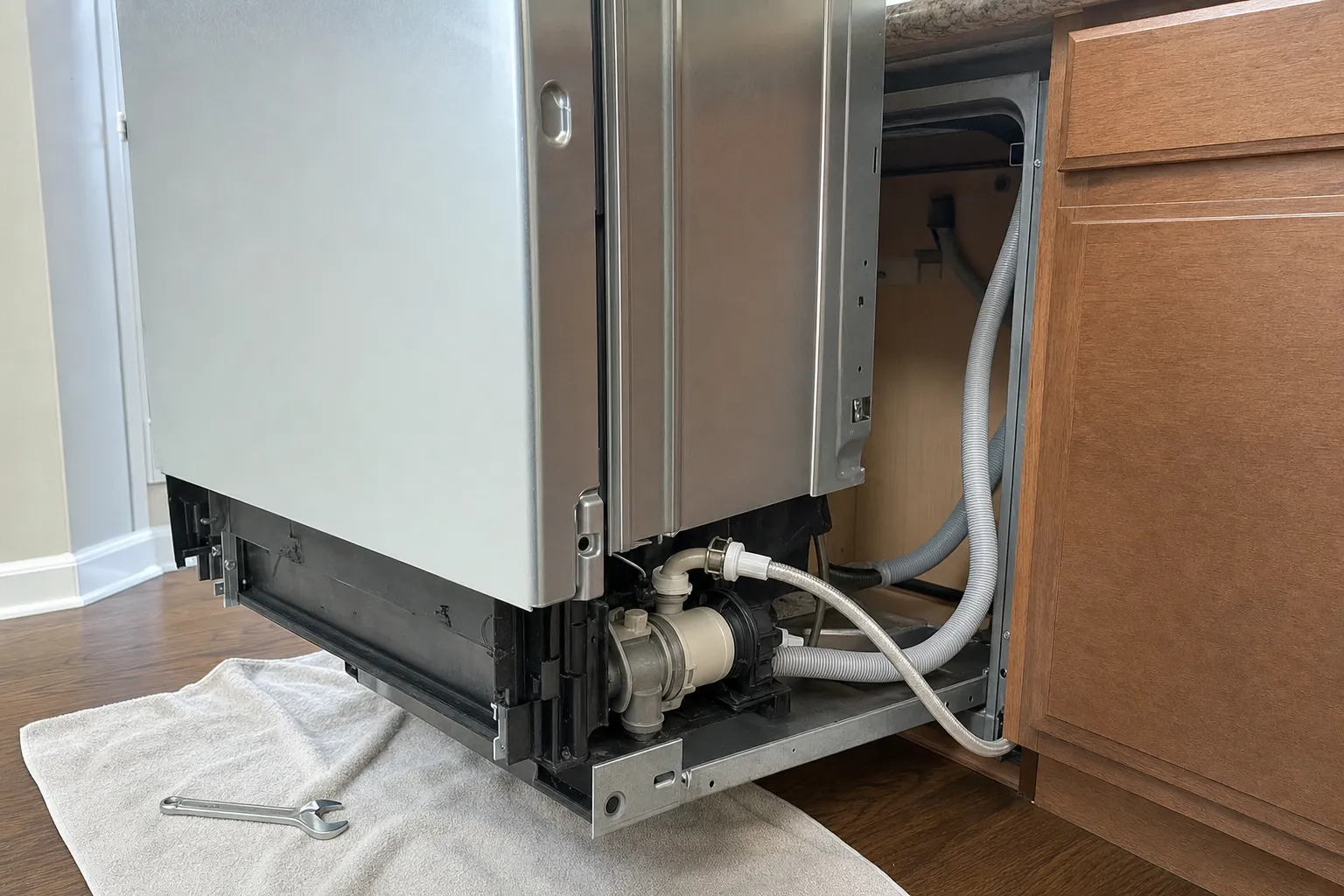
Only then do we open the machine: filter basket, sump, drain hose routing, spray arms held to the light for blocked holes, and the fill valve screen, which on well water is the component that collects the sediment nobody knew was there.
The fix that holds
Whole-house treatment is the fix that holds, and we will say that even though it is not work we are being called out to do. Iron and manganese removal, a softener sized to the actual hardness of your own bore, and a sediment pre-filter change the inputs to every appliance in the house at once. Replacing a fill valve on untreated water fixes the symptom until the same water fills the new one.
What is worth doing at the appliance is targeted. Shorten the refrigeration filter interval to match what you are actually seeing rather than the printed schedule. Descale the dishwasher’s wash system on a regular cycle. Keep the fill valve screen clean, and keep heavy loads off the septic system in the same evening. On a Wellington or downtown property on district water, none of this applies with anything like the same force — which is itself diagnostic, and worth remembering when a neighbour insists their identical machine has never done this.
Where to stop and call
Stop when the fault survives the water. If glassware is clean, the filter is fresh, the pump is behaving and the machine still will not fill, drain or run its cycle, you are past housekeeping.
A diagnostic visit is $89. Pump, control, fan and defrost work each fall in their own published price band, and a control board sits near the top of them. We would rather rule out the well before quoting a board, because a board fitted to a pressure problem will fail the same way.
Tell us when you book whether you are on a well, a shared system or the district, and whether the house is on septic. On these addresses it changes the first ten minutes of the visit. (425) 321-3414 gets a diagnosis booked rather than a quote guessed at.
Follow-ups
Is dishwasher detergent a problem for a septic system?
Detergent choice matters more here than on a sewer, and so does timing. The tank receives everything the machine discharges, so stacking several appliance cycles into one evening puts an unusual hydraulic load through it in a short window. Spread the loads out, keep the drain path clear, and treat a slow-draining machine as something to look at promptly rather than live with.
Why does the refrigerator water filter clog so quickly on our well?
Because it is filtering raw groundwater. Puget Sound wells commonly carry iron and manganese along with variable hardness, and none of it has been through a treatment plant. The cartridge is doing exactly what it should, only faster. Shorten the interval to match what you actually see when you pull one out, rather than following the printed schedule.
The dishwasher sometimes will not fill. Is that the control board?
Check the well before you replace anything. A pump cycles between cut-in and cut-out, so the fill valve sees a moving inlet pressure rather than a steady one, and a machine that times its fill can get it wrong. If the fault appears when other water is running in the house, that is a supply symptom. Boards fitted to pressure problems fail the same way.